Where Rovos Rail Goes
Pretoria → Cape Town → Durban → Victoria Falls → Botswana → Namibia → Zambia → Malawi → Angola → Dar es Salaam
Rovos Rail did not set out to be a luxury train company. It started with one man, a fascination with things mechanical, and a coach bought more or less on impulse. Forty years later the Pride of Africa runs from Cape Town to Dar es Salaam and is routinely named among the finest trains in the world.
About Rovos Rail
Rohan Vos ran an auto spares business in Witbank, a coal-mining town east of Pretoria, and had a lifelong obsession with anything mechanical. In 1985 he and his wife Anthea took a last-minute invitation on a Magaliesberg train trip for business suppliers. Anthea's own account of the day is that she became a train widow on it.
Permission to run a private train on the South African network came in December 1986, and on 29 April 1989 a locomotive and seven carriages left Pretoria for the Eastern Transvaal carrying four paying passengers, some friends and the press. That was the first Rovos Rail journey.
The company still operates from its own station at Capital Park in Pretoria, on Transnet Avenue, where the workshops strip vintage coaches to their frames and rebuild them by hand in wood, brass and glass. Guests arriving or departing there can take a walking tour of the yard and the museum, and it is one of the more genuinely interesting hours available in the city.
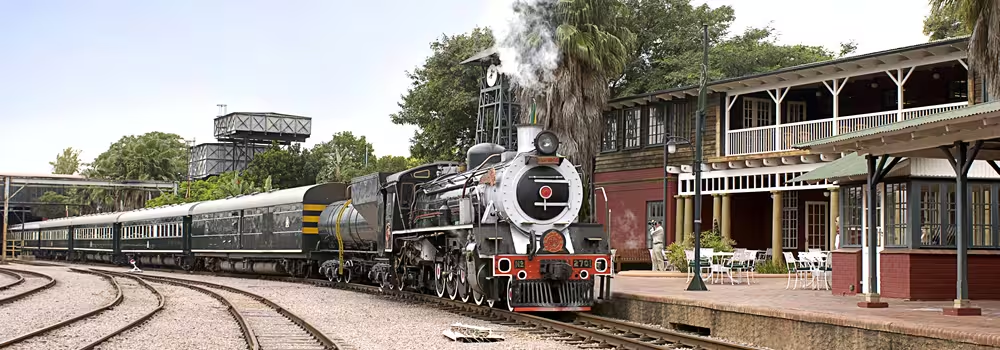
Rovos Rail Station at Capital Park, Pretoria, the company's own station and workshop
The Train
Each train carries a maximum of 72 guests in 36 suites, which is the single most important fact about travelling on it. The public rooms never feel busy and the staff know who you are by the second morning.
A train is made up of accommodation carriages, dining cars seating about 42, a lounge car seating about 26 with sofas and booths, a small gift shop, a smoking lounge seating about 11, and an observation car seating about 32 with an open-air balcony at the back. There is also a club lounge, a staff car, a kitchen car and a generator car.
Rovos carry no radios and no television sets on board, deliberately, in what they describe as maintaining the spirit of a bygone era. What the big picture windows and the open balcony give you instead is the reason most people book.
The Observation Car
About 32 seats under cover and an open-air balcony at the very back of the train. On a run through the Karoo or along the edge of Hwange it is the best seat on any train anywhere, and the bar is open from seven in the morning until roughly one the following one.
The Dining Cars
Rebuilt pillared and banquette dining cars with fine china, crisp linen and silver, seating about 42 between them. Meals are served in a single sitting, at tables for two and four, so guests eat together or on their own as they prefer.
The Lounge Car
About 26 seats in sofas and booths with big picture windows, used for mingling, for the on-board historian's lectures on the long journeys, and for quietly reading while a continent goes past.
Rebuilt by Hand
The coaches are vintage stock stripped to the frame and rebuilt at Capital Park in wood, brass and glass. The workshops are part of the station tour, and seeing the process makes the finished article considerably more impressive.
Dress and Dining Times
Days are smart casual, evenings more formal, and the long journeys have themed evenings for anyone who enjoys them. Breakfast runs from seven to ten, lunch at one, tea at half past four and formal dinner at half past seven.
The Kitchen
An accent on fresh local ingredients and traditional South African dishes, complemented by a serious South African wine list. The bar menu is comprehensive. French Champagne needs to be requested in advance and is charged extra.
The Suites
There are three categories of suite. All of them are en-suite, air conditioned, serviced daily by a dedicated host or hostess, and fitted with a safe, tea facilities, a writing desk, cupboards, USB ports and an internal telephone with twenty-four hour room service.
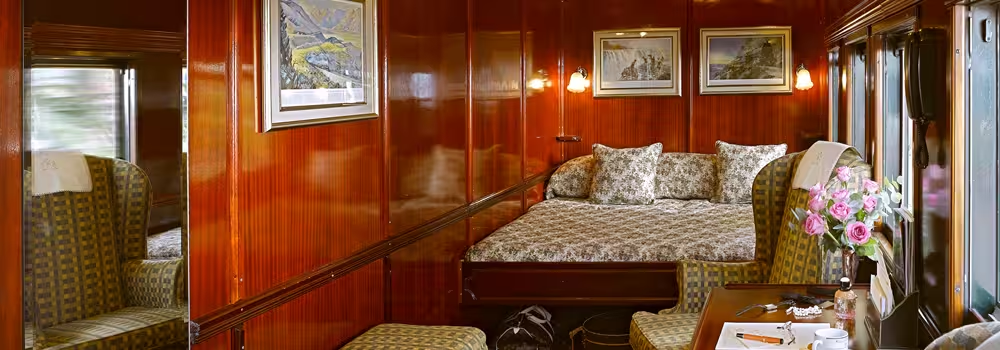
The Royal Suite takes up half a carriage and has its own lounge area and Victorian bath
Royal Suite
Half a carriage, about 16 square metres, with a private lounge area and an en-suite containing a Victorian bath, a separate shower, a toilet and a basin. Double or twin beds, and space to move around in a way that is genuinely unusual on a train.
Deluxe Suite
About 10 square metres with double or twin beds and an en-suite with shower, toilet and basin. Minibar, air conditioning, writing desk, luggage shelf, cupboards and safe. The middle option, and the one most guests choose.
Pullman Suite
About 7 square metres, with a sofa by day converted to a double or side-by-side twin beds at night, and an en-suite with shower, toilet and basin. Compact, well thought out, and the most affordable way on board.
What Is Included
All Accommodation
Your suite for the length of the journey, plus any off-train nights the itinerary calls for, such as the two nights at a Madikwe lodge and the night at the Victoria Falls Hotel on the Dar es Salaam route.
All Meals
Breakfast, lunch, afternoon tea and dinner throughout, served in a single sitting in the dining cars, with an accent on fresh local ingredients and traditional South African dishes.
All Beverages On Board
A curated selection of local and international wine, brandy, gin, rum, vodka, whisky, spirits, digestifs, grappa, liqueur, beer, cider, soft drinks, mixers and a cocktail menu. Bar service runs from seven in the morning until about one.
Guided Excursions
The off-train excursions set out in each itinerary, with qualified guides, transfers, entrance fees and preselected local wines, beers and soft drinks while you are out.
Room Service and Laundry
Twenty-four hour room service and a limited laundry service, both included. Each suite has a dedicated host or hostess who services it daily.
Historian and Doctor
On the long journeys, the Dar es Salaam, Copper Trail and Malawi Meander routes, an on-board historian who lectures in the lounge car and a doctor travel with the train. Both are included.
Not included: all other beverages, international sparkling wine, gratuities, personal expenses, visas, travel insurance, and pre and post tour transfers, accommodation and flights. Government tax is included.
The Journeys
Rovos Rail divide their routes into short journeys of two to four nights, which run frequently, and long journeys of nine to sixteen nights, which run a handful of times a year. Short journeys can also be combined, with a five per cent discount on the joined fare.
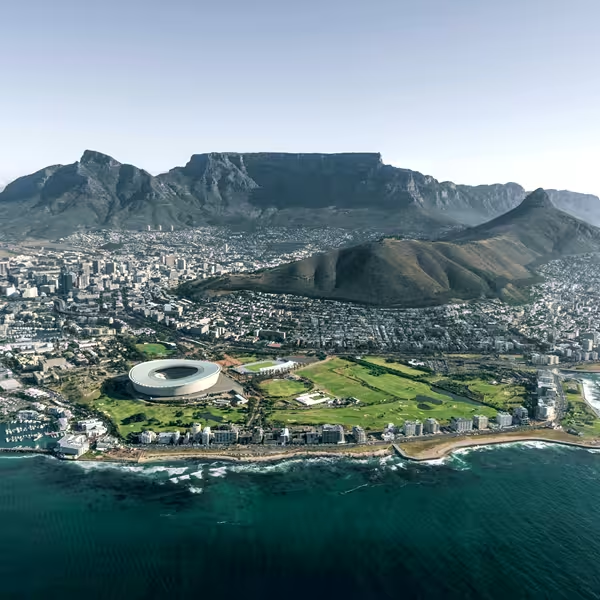
Cape Town
The flagship route, in both directions. Kimberley and the Big Hole, the Great Karoo, Victorian Matjiesfontein, the Hex River pass and the Cape winelands.
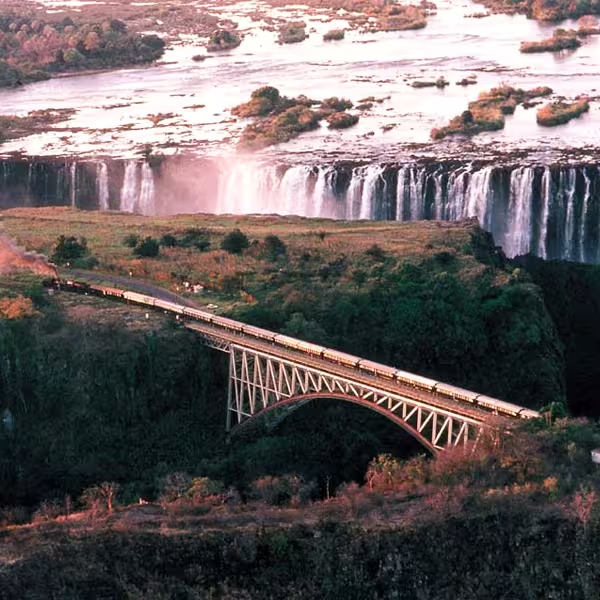
Victoria Falls
North across the Limpopo into Zimbabwe with a game drive in Hwange National Park, and on the four night version a full excursion into UNESCO-listed Matobo National Park.
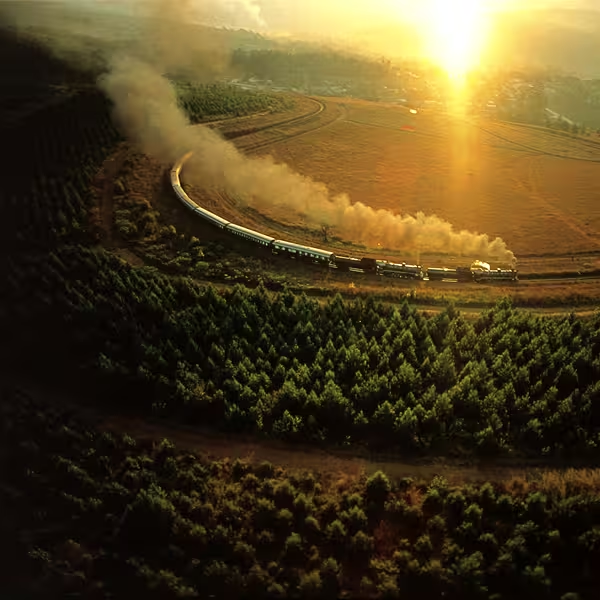
The Durban Safari
The shortest journey and the busiest. A Big Five game drive at Nambiti, the Spionkop battlefield, Ardmore Ceramics and the Valley of a Thousand Hills.
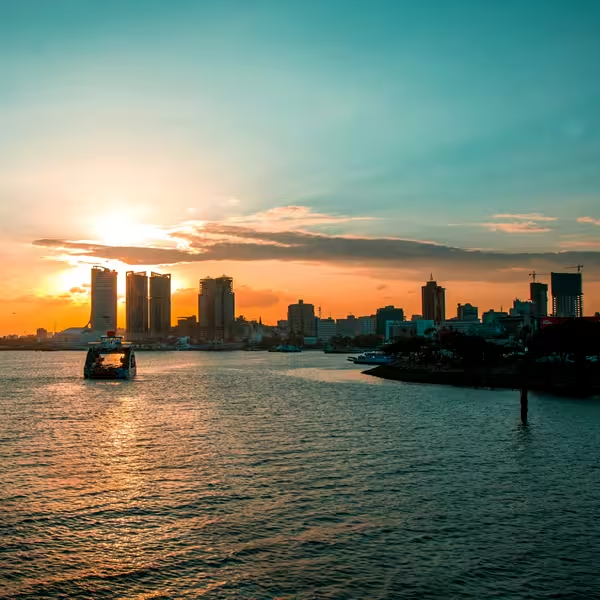
Dar es Salaam
One of the great railway journeys of the world. 5,800 kilometres between Table Mountain and the Indian Ocean, with Madikwe, the Victoria Falls Hotel, the Tazara line and Nyerere National Park.
Private Hire and the Events Train
Rovos Rail trains can be chartered privately, and the company also runs a separate Events Train that carries up to 250 guests on daytime journeys. Both are booked through us in the same way as a scheduled departure. Tell us the group, the occasion and the rough dates and we will find out what is possible.